Find out what solar panels cost in your area
Key takeaways
-
Heating Costs Surge: Home heating bills are predicted to rise by over 7% nationwide this winter, driven by global events and increased energy rates.
-
Heating Oil Hit Hardest: Households using heating oil, especially in the Northeast and Alaska, could see increases of about 70%.
-
Efficiency is Key: Sealing air leaks, improving insulation, and maintaining your heating system can cut energy use by 20% to 50%.
-
Assistance Available: Programs like LIHEAP and WAP offer financial aid and home improvements for eligible low-income households.
This winter, many American households are bracing for substantially higher home heating bills. Nationwide, heating costs are expected to climb by more than 7%. For some, particularly those in the Northeast and Alaska who rely on heating oil, increases could reach up to 70%. This significant surge stems from global events, like the war with Iran impacting oil prices, alongside general rises in electricity and natural gas rates¹.
The National Energy Assistance Directors Association (NEADA) projects a 7.1% rise in average U.S. home heating costs this winter. The average U.S. household is expected to spend $1,002 on heating.
Factors Driving Up Heating Costs
Several interconnected factors are contributing to this winter's higher heating bills. Global fuel supply disruptions, including refinery shutdowns or production cuts in the Middle East and Russia due to ongoing conflicts, are adding pressure to heating costs¹. Since the winter of 2021-2022, energy costs have increased by 23.9%².
While an El Niño weather pattern is expected to bring a warmer winter, which could moderate some cost increases by reducing demand, temperatures could still vary significantly from these forecasts³.
Heating Oil Users Face Steepest Increases
Households that rely on heating oil will likely see the sharpest price hikes this winter. NEADA projects about a 70% rise in heating oil costs, to an average of $2,977⁴. The U.S. Energy Information Administration (EIA) forecasts a 21% increase in average heating oil expenditures, reaching $2,115 for the November-March period².
These increases are primarily due to elevated crude oil and distillate prices, reduced global refining activity, and tight supplies, particularly on the East Coast⁵. Nearly 5 million U.S. households use heating oil, and about 82% of these homes are in the Northeast¹.
The Northeast is expected to see average heating bills rise by 16.9%, an increase of $221, bringing the average bill from $1,311 last winter to $1,532 this winter. This rise is driven by high electricity prices and the region's concentration of heating oil customers¹. In Alaska, unsubsidized communities faced average heating fuel prices of $6.49 per gallon in Winter 2026, significantly higher than the national average.⁶ The average heating oil price in Alaska for the 2025-2026 season was $3.74 per gallon, 13 cents higher than the previous winter. Historically, October has been the cheapest month to buy heating oil in Alaska, and March the most expensive.
Electricity and Natural Gas Costs Also Rising
Electric heating costs are projected to increase by about 6%, reaching an average of $1,215, according to NEADA¹. NEADA also forecasts a 9.0% rise for families relying on electric heating. The EIA anticipates a 4% national increase in average expenditures to $1,196 for households primarily heating with electricity². This EIA figure includes an expected 3% rise in residential electricity prices and slightly higher consumption³. Wholesale electricity prices are projected to average $52 per megawatt-hour (MWh) in 2026, an 11% increase from 2025, driven by weather-related increases in some regions.
The largest forecast increase in electricity spending is in the West, with a 9% rise expected due to colder weather³. Conversely, Northeast electricity expenditures are forecast to decline by 3% due to milder weather reducing consumption⁵. For more information on average electricity usage, see our guide on how many kWh a house uses: 2026 data.
Households using natural gas are expected to see heating costs increase by 5.8%, according to NEADA. However, the EIA forecasts a 9% decline in average winter natural gas expenditures nationally, down to $640, for households using it as their primary heating fuel. This decline is largely due to lower natural gas prices and inventories entering winter at 2% above the five-year average². The Northeast is specifically expected to see a 14% decline in natural gas expenditures⁵.
Propane bills are projected to rise roughly 5% to an average of $1,350 by NEADA¹. Another NEADA projection suggests an 8.7% increase for propane users. The EIA, however, expects national propane expenditures to decline 3% to $1,246². In the Northeast, a 15% decline in propane expenditures is projected, to $1,687⁵.
NEADA's report (September 14, 2026) generally shows higher projected increases for electric, propane, and heating oil than the EIA Winter Fuels Outlook (October 6, 2026)².
Strategies to Save on Heating Costs
While some cost increases are unavoidable, homeowners have several practical ways to reduce their winter heating bills. Focusing on energy efficiency and smart usage can significantly impact your expenses.
Improve Home Energy Efficiency
Making your home more energy-efficient is one of the most effective long-term strategies to save money.
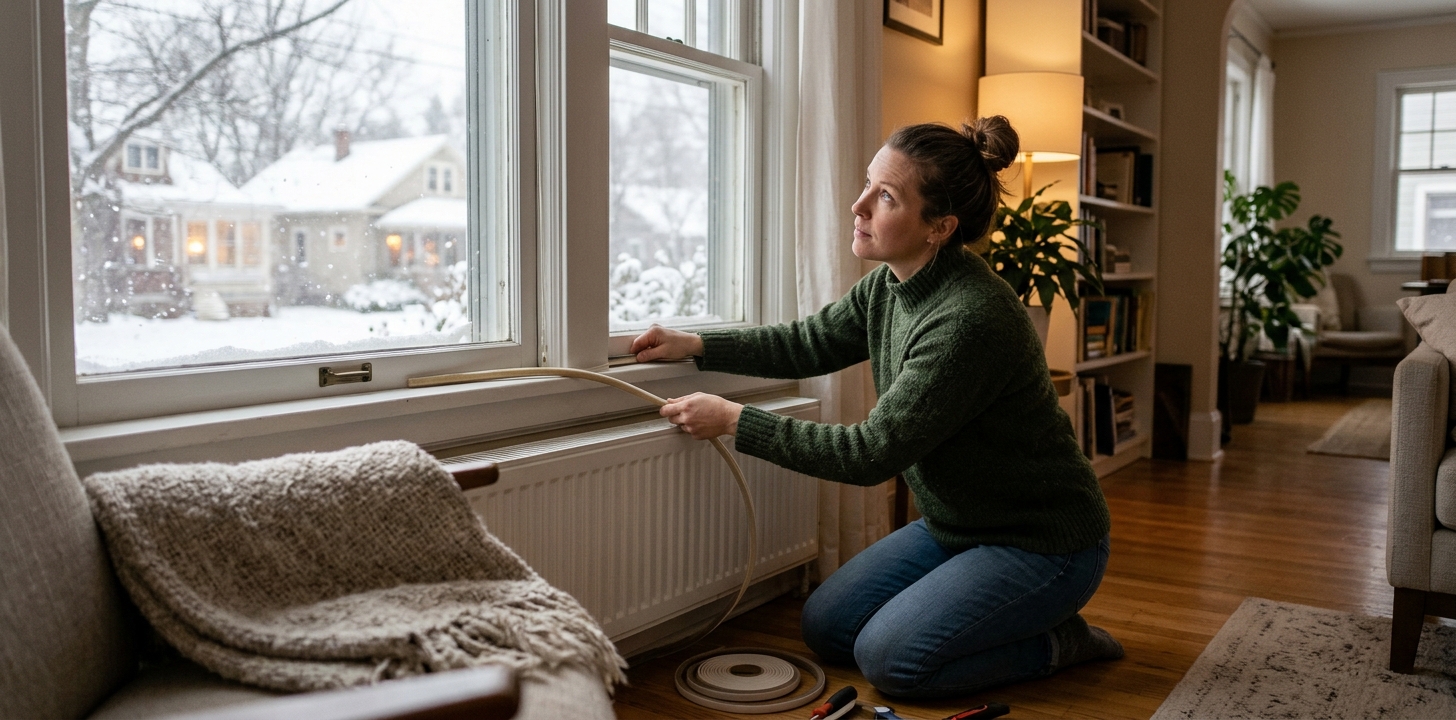
Seal air leaks. Check around windows, doors, utility penetrations, and recessed lights. Use weatherstripping, caulking, and spray foam to seal these gaps.
Enhance insulation. Add insulation in attics, walls, floors, hot water pipes, and ducts to help maintain indoor temperatures. Wrapping your water heater in insulation can save about 10% on related electricity and water heating costs⁷.
Regular maintenance and upgrades. The U.S. Department of Energy (DOE) indicates that maintaining heating systems, along with upgrades, insulation, and sealing, can cut a home's energy use for heating and cooling by 20% to 50%.
Professional tune-up. Schedule an annual professional tune-up for your heating system before winter begins.
Replace air filters. Replace dirty air filters regularly, ideally monthly or as needed⁸.
Consider system upgrades. If your system is old, consider upgrading to a high-efficiency furnace, heat pump, or dual-fuel system, especially if you currently use heating oil. For homes heated with oil, a cold-climate heat pump or dual-fuel setup can significantly reduce reliance on expensive heating oil.
Smart Heating Habits
Small changes in daily habits can also contribute to substantial savings.
Programmable thermostats. Install a programmable or smart thermostat to automatically lower temperatures when you are asleep or away. Lowering your thermostat 7-10°F for eight hours a day can cut annual heating and cooling costs by up to 10%, according to the DOE⁷.
Reverse ceiling fans. Run ceiling fans in a clockwise direction on a low speed to push warm air downwards.
Keep vents clear. Ensure heating vents are clear of obstructions like furniture, rugs, or drapes. Avoid closing vents in unused rooms, as this can negatively impact system efficiency.
Utilize natural heat. Open south-facing curtains during the day to capture solar heat and close them at night to retain warmth⁸.
Strategic space heaters. Use space heaters to warm only occupied rooms, allowing you to keep other areas cooler.
Fireplace dampers. When not in use, ensure fireplace dampers are closed and check the seal on the flue damper.
Explore Financial Assistance and Rebates
Several programs can provide financial relief or help fund energy-saving improvements.
LIHEAP. The Low Income Home Energy Assistance Program (LIHEAP) is a federal program that offers grants for heating bills, energy crises, and weatherization. LIHEAP can provide cash grants ($200-$1,000) and crisis grants ($25-$1,000) for emergencies like broken heating equipment or potential utility shut-offs. Eligibility is typically based on income, often at or below 150% of federal poverty guidelines or 60% of state median income. State-specific application periods apply; for example, in Pennsylvania, it runs from November 2, 2026, to April 23, 2027⁹.
Weatherization Assistance Program (WAP). Consider the Weatherization Assistance Program (WAP) for home improvements that reduce energy consumption.
Home energy audit. Obtain a free home energy audit to pinpoint specific areas of heat loss and identify impactful improvements.
Local and state programs. Investigate local and state energy efficiency programs and rebates for HVAC upgrades and insulation. While federal tax credits for energy-efficient home improvements ended in December 2025, state and local rebates may still be available.
Heating oil contracts. If you use heating oil, locking in a fixed-price or capped contract can protect against price increases⁷.
Facing higher winter heating bills is a reality for many Americans this year. By understanding the contributing factors and implementing strategic changes, homeowners can mitigate some of these rising costs. Focus on improving your home's energy efficiency, adopting smart heating habits, and exploring available assistance programs to manage your expenses more effectively.
Sources:
Average US heating bills to rise 7% this winter nationwide – report, Marina Dunbar, 2026 (theguardian.com)
Winter Heating Costs 2026-27: Up 8.7%, and What You Can Control (cliqforhome.com)
Short-Term Energy Outlook - U.S. Energy Information Administration (EIA) (eia.gov)
Oil Heat Bills Could Jump 70 Percent This Winter, Projections Show, CCN, 2026 (ccnnation.com)
2026–27 Winter Energy Outlook: Five Things to Know, Jaclyn Tino (blog.ugies.com)
Alaska%20Fuel%20Price%20Report%20 %20January%202026 (commerce.alaska.gov)
The Cold Reality Of 2026 Heating Bills Are You Ready For The Spike (tinawashingtonhomes.com)
Don T Burn Cash 7 Ways To Lower Your Heating Bil (a1hc.com)
2026-27 LIHEAP: Apply Nov. 2, 2026 - April 23, 2027 for help with home heating bills — Legal Aid of Southeastern Pennsylvania, Marion Fraley, 2026 (lasp.org)
Deana is a Home Improvement Editor with a passion for helping homeowners navigate renovation, repair, and remodeling with confidence. Specializing in roofing, kitchen and bath remodeling, and outdoor living spaces, she combines industry knowledge with a genuine commitment to making complex home projects feel approachable for readers at every stage of their journey. Her path into home improvement media began after several years working alongside ...
Learn more about Deana Barbaro