Find out what solar panels cost in your area
Key takeaways
-
Average Cost: Solar inverters typically cost about $1,500 to $3,000 installed, with costs varying by inverter type and system size.⁵
-
Inverter Types: String inverters are the most affordable, microinverters offer panel-level optimization at a higher upfront cost, and hybrid inverters integrate battery management.
-
Long-Term Value: Inverter efficiency, warranty coverage, and expected lifespan can affect the system's long-term costs and performance.
-
Market Changes: An FCC restriction on certain foreign-produced, utility-interactive inverters, modified in August 2026, may impact consumer choice and prices.
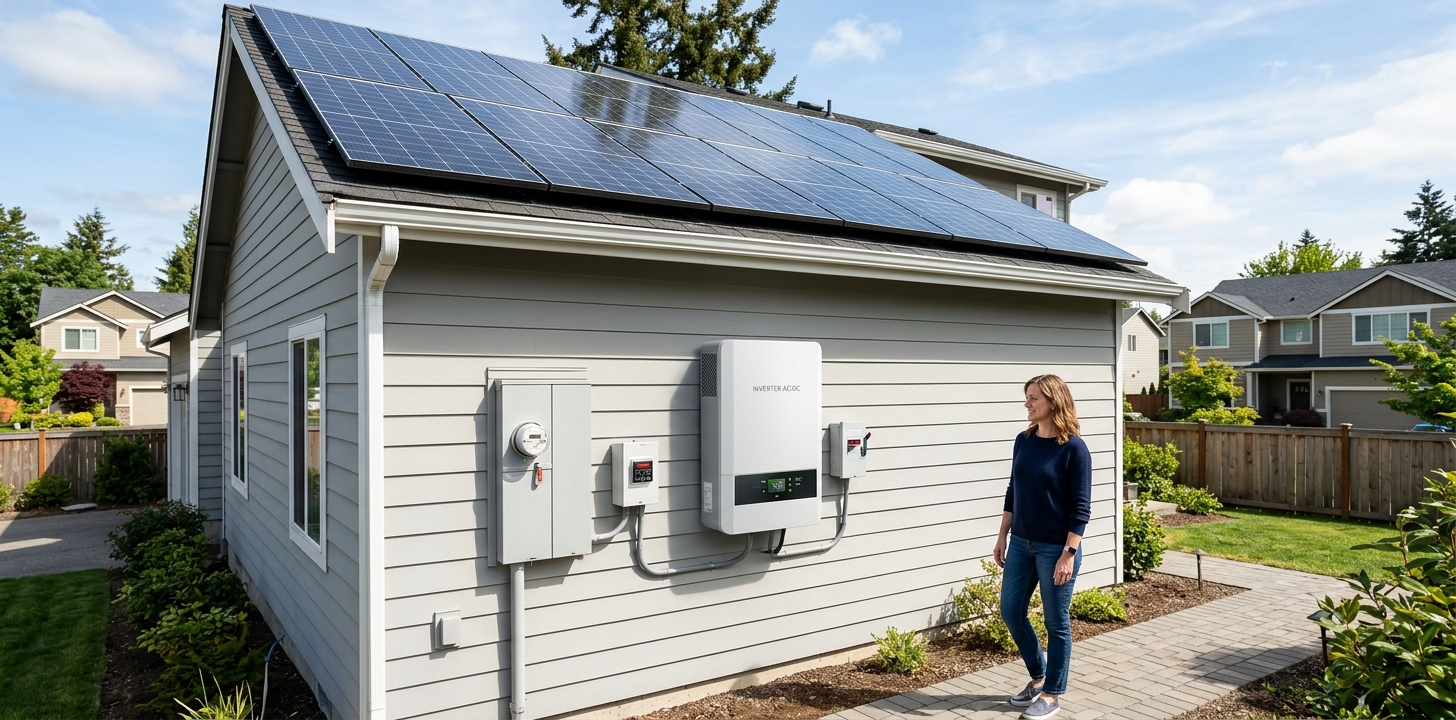
For US homeowners considering solar in 2026, understanding the nuances of solar inverter costs is crucial. The inverter is a central component of any solar energy system. It converts the direct current (DC) electricity generated by solar panels into alternating current (AC) electricity, which is what your home appliances use and what the grid accepts.
Solar inverters typically cost about $1,500 to $3,000 installed, with costs varying by inverter type and system size. Inverters typically account for 6% to 9% of the total solar system cost¹.
Types of Solar Inverters and Their Costs
The type of solar inverter you choose will be the biggest driver of its upfront cost and long-term value. There are three primary types for residential use: string inverters, microinverters, and hybrid inverters. Each has distinct characteristics and price points.
String Inverters
String inverters are the most traditional and generally the most affordable option for residential solar systems. They connect a "string" of solar panels to a single inverter unit.
The cost for string inverters typically ranges from $1,000 to $3,000². When combined with power optimizers, which are devices that maximize output from individual panels before sending power to a central string inverter, the cost is approximately $0.15-$0.25 per watt³. This is often less expensive upfront than a system using microinverters.
Pros and Cons of String Inverters
Pros
-
Lower upfront cost, making them more budget-friendly for initial installation.
-
Simpler installation process for the main inverter unit.
-
Readily available and a mature technology with a proven track record.
Cons
-
Performance can be affected by shading or debris on even a single panel, reducing output for the entire string.
-
Monitoring is typically system-wide, not panel-specific, making it harder to diagnose issues.
-
String inverters typically include 5 to 12-year warranties, with options to extend to 15 or 20 years at extra cost.²
Microinverters
Microinverters are installed on each individual solar panel. This design allows each panel to operate independently, optimizing its output regardless of the performance of other panels. This is particularly beneficial in systems with partial shading or varied panel orientations.
Microinverters have a higher upfront cost, typically ranging from $150 to $250 per panel. For a standard 20-panel solar system, the total cost for microinverters can be between $3,000 and $5,000². Overall, microinverter systems can be $0.25-$0.45 per watt more expensive than string inverter systems³.
The choice between string and microinverters often comes down to your roof's specific conditions, such as shading patterns, and your budget for upfront versus long-term performance. You can compare the options further by reading "Best Solar Panel Inverters: Microinverter vs. String Inverters" to see which one is best for your home.
Hybrid Inverters
Hybrid inverters combine the functions of a traditional solar inverter with a battery inverter, allowing them to manage power flow from solar panels, batteries, and the utility grid. This makes them ideal for homes looking to integrate solar energy storage.
Due to their integrated battery management electronics, hybrid inverters are generally more expensive. They typically cost between $2,500 and $5,000 or more².
Long-Term Costs: Efficiency and Lifespan
While upfront costs are a major factor, the long-term expenses and savings associated with a solar inverter are equally important. These include inverter efficiency, lifespan, and potential replacement costs.
Efficiency and Energy Generation
Modern quality inverters achieve efficiencies of 97-99%, minimizing energy loss during conversion⁴.
Inverter Lifespan and Replacement Costs
The lifespan of your inverter directly impacts your long-term costs. When an inverter fails outside its warranty period, you'll incur replacement costs.
String inverters typically last 10 to 15 years. String inverters usually include 5 to 12-year warranties, with options to extend to 15 or 20 years at extra cost.
Microinverters are designed for longevity, typically lasting 20 to 25 years, which aligns with the lifespan of most solar panels. They usually come with a 20 or 25-year warranty.
Hybrid inverters have an inverter portion that generally lasts 10-15 years, similar to string inverters, though some extended warranties may be available².
The average cost to replace a solar inverter in the US ranges from $350 to $3,500⁵. This cost includes both the new inverter unit and labor. Choosing an inverter with a longer warranty or proven reliability can help mitigate these potential future expenses.
Impact of the 2026 FCC Inverter Restrictions
A notable change impacting the solar inverter market in 2026 is a new regulation from the FCC. In July 2026, the FCC added certain foreign-produced power inverters to its Covered List, restricting new covered models from receiving FCC equipment authorization⁶. The FCC narrowed the definition in August to certain foreign-produced, utility-interactive inverters with remote communications capabilities.⁷ Previously authorized models generally remain available. These restrictions stem from national security and cybersecurity concerns.
The restrictions could affect future product availability and pricing, although the extent of any impact on consumer prices remains uncertain. Homeowners should consult with their solar installers to understand how these restrictions might affect their system design and costs.
Financing Your Solar Inverter and System
The overall cost of your solar system, including the inverter, can be substantial. Many homeowners explore financing options to make solar more accessible. This can include solar loans, leases, or power purchase agreements (PPAs). You can learn more about managing these expenses through solar financing companies.
While the federal residential solar tax credit has expired, state and local incentives may still be available to help offset some of the costs.⁵ Researching solar incentives in your area can provide further opportunities for savings. These incentives can reduce the net cost of your system, making a quality inverter more attainable.
Understanding the costs associated with your solar inverter is a key part of making an informed decision about your home's energy future.
Sources:
Solar Inverter Cost (homeguide.com)
Solar Inverter Cost, Lifespan & Maintenance: The 2026 Owner’s Guide, 2026 (kratopower.com)
Microinverters Vs String Inverters 2026 (nuwattenergy.com)
Solar Inverters: Types, Benefits and Cost (2026), 2026 (consumeraffairs.com)
Solar Inverter Cost (angi.com)
United States: FCC Adds Inverters and Robotics to Covered List | Insight (bakermckenzie.com)
US blocks certification of new foreign-made solar inverters and BESS equipment, brianpublicover, 2026 (ess-news.com)
Will is a Home Improvement Editor with a passion for helping homeowners make confident, well-informed decisions about their homes. He specializes in reviewing and refining content covering home renovations, solar energy, roofing, HVAC, insulation, windows, flooring, plumbing, electrical systems, and other key areas of residential improvement. With a strong background in research and technical writing, Will is committed to ensuring every article ...
Learn more about Will Anning