Find out what solar panels cost in your area
Key takeaways
-
Community Focus: Solarize campaigns are local efforts that encourage community members to adopt solar PV systems, often resulting in collective purchasing power and reduced costs.
-
Cost Savings: Participants typically see upfront prices 10-20% lower than market averages due to bulk purchasing and lower installer marketing costs³.
-
Simplified Process: These programs streamline solar installation, with companies often guiding participants through all steps, including permits and paperwork¹.
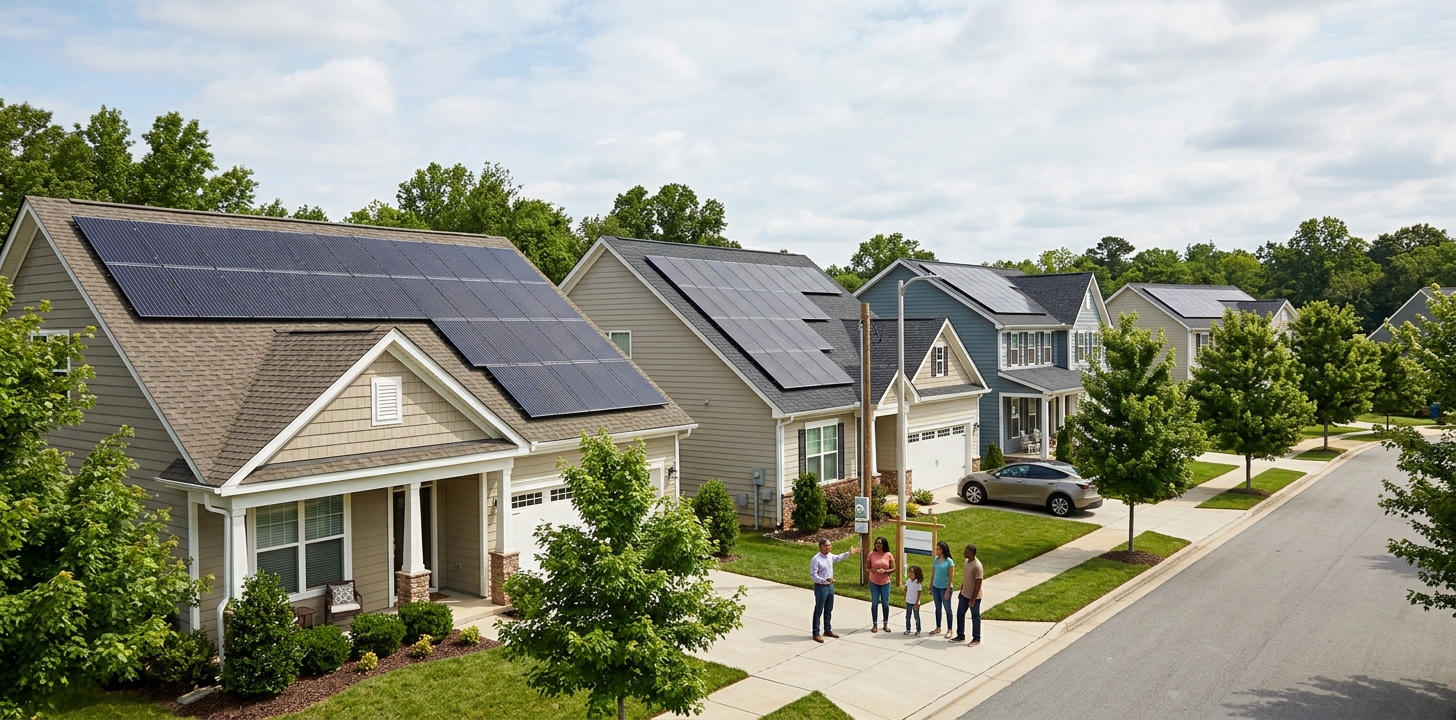
"Solarize" campaigns are local or regional efforts that help communities adopt solar PV energy systems. These programs aim to make solar energy more affordable and accessible for homeowners and small businesses¹. They address common barriers such as the initial cost, the perceived complexity of installation, and customer hesitation.
These campaigns often involve a group of residents in a specific area collectively buying solar systems². Local governments, energy committees, or third-party organizations frequently organize these initiatives, sometimes with support from non-profit marketing firms. Campaigns usually have a limited sign-up window, typically three to six months, to encourage quick adoption¹.
How Solarize Campaigns Work
Solarize campaigns simplify the process of going solar by centralizing many of the typical steps. They leverage group purchasing power and streamlined operations to benefit participants. This model has proven effective in various regions across the U.S.
Group Purchasing and Cost Reduction
A core mechanism of Solarize programs is the collective purchasing of solar systems. By bringing together many interested homeowners, campaigns attract solar installers who can offer better pricing. This competitive selection process lowers customer acquisition costs for installers, who then pass these savings on to participants¹.
Participants typically receive an upfront price that is 10-20% lower than the average market rate³. For example, Connecticut Solarize campaigns, based on 2015 data, achieved installed system prices that were, on average, 16% lower than the market rate⁴. The discount can even increase as more people sign up for the program¹.
Streamlined Installation Process
One significant advantage of Solarize campaigns is how they simplify the solar installation process. The selected installation companies often guide participants through every step. This includes handling paperwork, permits, and post-installation logistics¹.
Campaigns frequently host events where community members can learn about solar, meet installers, and hear from neighbors who have already installed systems¹. This community-driven approach builds trust and demystifies the adoption process.
Always ensure your roof is in good condition. Solar panels typically last 25 years, so any needed roof replacement should happen before installation⁵.
Financial Benefits Beyond Discounts
Beyond the immediate cost savings from group purchasing, Solarize participants can take advantage of broader solar incentives. The 30% federal Investment Tax Credit (ITC) significantly reduces the net cost of a solar system⁶. This credit expired December 31, 2025 and no longer applies to homeowner-purchased solar systems in 2026.
Solarize programs can also lead to a shorter payback period for the investment. Homeowners may also qualify for state or utility incentives, further reducing their expenses⁶. You can explore additional financial incentives such as Solar Renewable Energy Credits (SRECs).
Community and Environmental Impact
Solarize campaigns offer more than just individual savings; they also foster significant community and environmental benefits. By promoting widespread solar adoption, these programs contribute to local energy resilience and a cleaner environment.
Energy Savings and Home Value
Switching to solar can lead to substantial long-term savings on electricity bills. The average American home electricity bill was $136.84 per month or $1,642.08 per year in 2023⁷. Over its lifetime, a solar system can save homeowners $30,000 or more, especially with rising utility rates, which have increased over 5% per year on average⁸.
Solar installations also add value to homes and can help them sell faster. Studies suggest homes with solar often sell for about 4% higher prices than comparable properties⁶. Homeowners should also contact their insurance provider, though solar panels typically do not increase premiums⁵.
Environmental Advantages
Embracing solar energy through campaigns like Solarize directly reduces greenhouse gas emissions. This helps improve air quality and decreases reliance on fossil fuels⁶. For example, RMI-supported Solarize campaigns in 2021-2022 are estimated to avoid over 106,000 metric tons of CO2 over 25 years⁹.
Beyond environmental benefits, home solar, particularly when paired with battery storage, enhances energy resilience. It provides a local power source during grid disruptions . This is a growing concern for many homeowners facing increasingly frequent power outages.
Driving Inclusivity and Equity
Many recent Solarize campaigns prioritize equity, aiming to increase participation among communities of color and low- and moderate-income (LMI) households¹. These groups have historically faced more barriers to adopting solar.
Strategies for inclusivity include structuring campaign teams with marginalized communities at the forefront. Campaigns also secure funding and partner with financial institutions like green banks and credit unions to offer incentives and affordable financing specifically for LMI residents. Tailored outreach efforts ensure that information reaches these residents effectively¹. An example is Solarize Philly, which included a workforce development program and no-upfront-cost/no-credit-requirement lease options to expand access.
Pros
-
Upfront cost savings of 10-20% compared to market average³.
-
Simplified installation process with installer guidance for permits and paperwork.
-
Access to community support and educational events.
-
Long-term electricity bill savings, potentially exceeding $30,000 over system lifetime⁸.
-
Increased home value by approximately 4%.
-
Environmental benefits, including reduced greenhouse gas emissions⁶.
Cons
-
Limited sign-up window, typically 3-6 months.
-
Requires a dedicated team to manage marketing and partnerships .
-
Geographic limitations; campaigns are local or regional¹.
The Role of Local Organizations
The success of Solarize campaigns relies heavily on local involvement. Various organizations collaborate to plan, launch, and sustain these initiatives. This collaboration ensures that campaigns meet community needs effectively.
Government and Community Leadership
Local governments are crucial in launching and supporting Solarize campaigns. They often provide the initial push and resources needed to get programs off the ground. Community-based organizations (CBOs) are also essential partners. They help integrate local voices, spread awareness, and reach specific demographics, including LMI residents¹.
A dedicated team, whether volunteers or paid staff, manages the campaign's many aspects. This includes marketing efforts, arranging partnerships with CBOs, local utilities, and financial institutions, and overseeing the installer selection process .
Historical Success Stories
Solarize campaigns have a strong track record of success across the U.S. These programs have significantly boosted solar adoption in participating areas.
Portland, Oregon: The first Solarize program, started in 2009, facilitated over 600 solar systems in two years. This increased installed solar in Portland by more than 400% in three years².
Massachusetts: Launched in 2011, Solarize Massachusetts saw over 2,400 residents and business owners sign contracts. Almost every participating community more than doubled its residential solar projects .
Connecticut: Starting in 2012, Solarize Connecticut grew the number of homes with solar from 800 to over 12,500 in just three years (2012-2015) .
Tompkins, New York: Solar Tompkins in 2014 involved three installer partners and signed up 400 projects, totaling over 3 Megawatts of solar PV systems during a seven-month program .
The Triangle, North Carolina: Solarize the Triangle, a program now closed as of 2026, was recognized as the largest Solarize campaign in the U.S. for community participation, with over 2,000 participants and hundreds of new installations .
The Rocky Mountain Institute (RMI) supported over 20 local governments in 2021-2022. These efforts led to nearly 1,200 residential solar installations and over 10 MW of capacity, saving households an estimated $8 million and avoiding over 106,000 metric tons of CO2 over 25 years⁹. While primarily focused on rooftop solar, some Solarize initiatives may also offer community solar options.
Keep in mind that Virginia law, as of 2014, prevents homeowner associations (HOAs) from prohibiting solar installation unless a policy was adopted earlier⁵. This can provide a level of protection for homeowners in those communities considering solar.
Sources:
Solarize (cityrenewables.org)
Solarize: the Grassroots Initiative that Cut Solar Costs up to 35%, 2024 (ecoblock.berkeley.edu)
Community Purchase Programs | Low-Income Solar Policy Guide, 2021 (lowincomesolar.org)
Making a Difference: Solarize Programs Accelerating Solar Adoption, 2026 (energy.gov)
Solarize%20story%20 %20solarize (fairfaxcounty.gov)
solarcrowdsource.com (solarcrowdsource.com)
Savings (poweroutage.us)
How Much Can Solar Save You?, Isbel Depner, 2026 (freedomforever.com)
Narrowing the Solar Equity Gap through Solarize, Ryan Shea, Jackie Lombardi, 2026 (rmi.org)
Deana is a Home Improvement Editor with a passion for helping homeowners navigate renovation, repair, and remodeling with confidence. Specializing in roofing, kitchen and bath remodeling, and outdoor living spaces, she combines industry knowledge with a genuine commitment to making complex home projects feel approachable for readers at every stage of their journey. Her path into home improvement media began after several years working alongside ...
Learn more about Deana Barbaro