Updated 1 year ago
What Uses the Most Electricity in a Home? Top 5 Power-Hungry Appliances
Written by
Andy Sendy
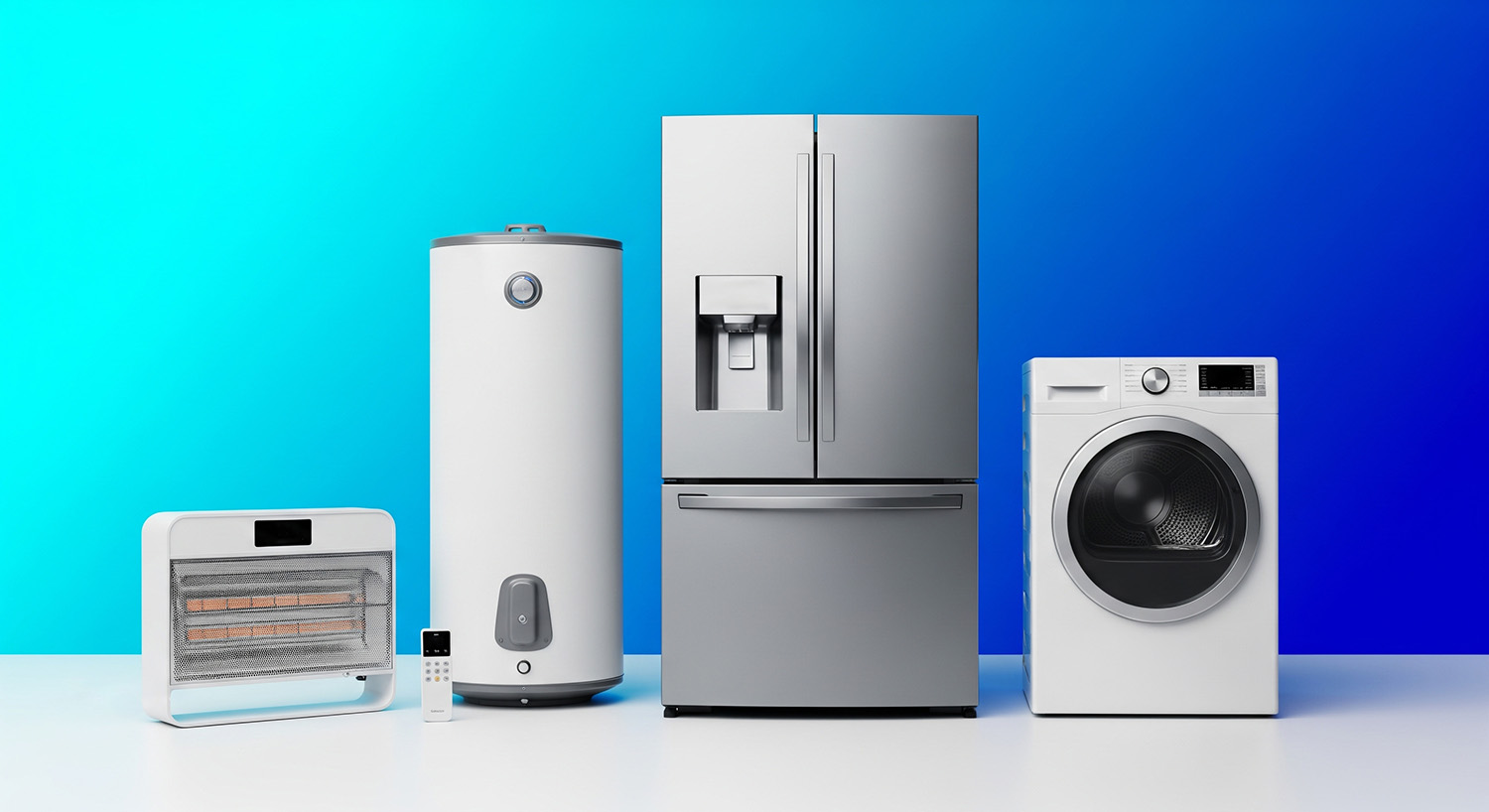
Install solar panels so you don’t have to sacrifice your favorite appliances
The average household consumes about 900 kilowatt-hours (kWh) of electricity each month, and pays about $132 in electricity bills. Have you ever wondered what home appliances are using the most electricity and running up your bill?
According to the Energy Information Administration’s (EIA) Annual Energy Outlook, the appliances that recorded the most residential energy consumption in 2025 were:
Space heating and cooling
Water heating
Refrigeration
Clothes dryers
Lighting
Understanding the electricity usage in your home is the first step to making improvements, cutting electricity costs, and becoming a more energy efficient household – especially as electricity rates continue to rise.
Key takeaways
The average household consumes about 900 kWh of electricity each month and pays about $132 on electricity.
The most energy-consuming household appliances are: space heating and cooling, water heating, refrigerators, clothes dryers, and lighting.
For each type of appliance, there are simple, cost-effective ways to lower your energy consumption each month and save on electricity bills.
Installing solar is the best way to lower, or even eliminate your electricity bills – without having to sacrifice your favorite devices.
Top 5 most energy-consuming appliances
1. Space heating and cooling
It’s no surprise that heating and cooling appliances top the list for electricity consumption in U.S. households. It takes a lot of electricity to run systems like air conditioners, central air, HVAC systems, and heaters, and use a significant amount of home energy.
In fact, EIA data states that nearly 30% of all household energy usage nationwide goes towards heating and cooling. Of course, this varies by region. Homes in the south, for instance, tend to consume more energy for air conditioning to stay cool during hot days for most of the year.
2. Water heating
The second most energy-consuming household appliance is hot water heaters. Heating water for daily activities, like showers, dishwashers, and doing laundry, requires a significant amount of energy. Especially if your home’s water heater runs on electricity.
EIA data shows water heaters used about 8.8% of all household electricity consumption in 2025. Older or inefficient models can consume even more electricity, making it one of the biggest contributors to your monthly electric bill after heating and cooling systems.
3. Refrigeration
Refrigerators take the third spot when it comes to household electricity usage. The average refrigerator uses 500 watts of power, though this can range anywhere from 300 to 800 watts depending on the size, age, and efficiency of the model.
Most refrigerators use about 6 kWh of energy per day – that’s about 20% of the total energy a home uses in a month. According to EIA data, refrigerators account for just under 7% of total household energy use.
4. Clothes dryers
Clothing dryers are also a very energy-intensive household appliance. Dryers use electricity to heat coils within them, creating hot hair that dries clothing. According to Whirlpool, dryers use anywhere from 1800 to 500 watts of energy on average, depending on the load and cycle configurations.
EIA data showed that clothes dryers accounted for just under 4% of all household electricity consumption in 2025. Dryer use also depends on a few factors. If you have a large family and are doing multiple full loads of laundry a week – you're using a whole lot more energy.
5. Lighting
Last but not least, home lighting rounds out the list. Light bulbs can use anywhere from 2 to 100 watts each, depending on the type. Older incandescent bulbs draw the most power, while modern LED bulbs are the most energy-efficient.
EIA data suggests that lighting accounted for nearly 4% of total household electricity use, tying with clothes dryers. While lighting might seem like a minor contributor, it’s an essential home item that keeps your home out of the dark.
What appliances use the most electricity: Honorable mentions
Aside from the top five energy-consuming appliances, there are several other common household devices that can significantly impact your electricity bill. Televisions and related entertainment equipment, like gaming consoles, cable boxes, and sound systems, often stay plugged in and in standby mode – quietly drawing power around the clock. Computers and their accessories also contribute to daily energy usage, especially in homes with multiple devices and remote work setups.
Cooking appliances like microwaves, toasters, and electric ovens may not run for long periods, but use a lot of power when in use. Furnace fans, which help distribute heated or cooled air throughout your home, can also be energy-intensive.
While these appliances may not top the list, together they have a sizable impact in your home’s energy usage.
Why solar panels are key to lowering electricity bills
While there are plenty of methods to lowering electricity bills, few options offer the long-term savings and environmental impact of investing in renewable energy. Installing solar panels on your home not only helps you significantly cut down or even eliminate your electric bill, but also allows you to take control of your energy production.
By using the sun to generate power, you’re less reliant on the electrical grid and are protected from rising utility rates. On average, a residential home with solar panels saves $1,500 each year in electricity expenses. When you install solar panels, you don’t have to sacrifice your favorite energy-consuming devices.
If you aren’t sure about solar panels being right for your home and unique situation, try out our solar calculator to learn about cost, savings, and different incentives available in your area.
Andy Sendy is a well-known and trusted figure within the solar industry with more than 15 years of experience. His video reviews of the leading brands of solar panels and home energy storage batteries are a must-watch each year for both homeowners and solar industry professionals alike. In 2021, an article he wrote about a clause in the Tesla solar panel rental contract caused Tesla to change this clause within days. He was the founder of Sola...
Learn more about Andy Sendy