Find out what solar panels cost in your area
Your electric bill has become one of the few household expenses that seems to move in only one direction: up. Here's what's happening, why it's happening, and what you can do about it.
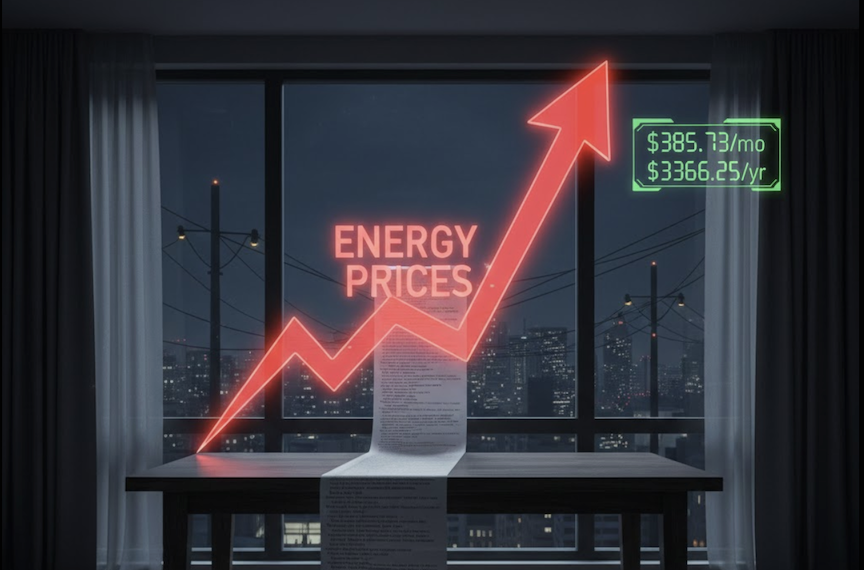
The U.S. Energy Information Administration (EIA) reports that the average residential electricity price increased by 31.38% from 2020 to 2025. In 2025 alone, the national average reached 17.29 cents per kilowatt-hour, nearly 5% higher than the year before.
These increases aren’t temporary. They reflect long-term structural forces that are reshaping how much Americans pay to keep the lights on.
Key takeaways
-
Average U.S. residential electricity prices jumped 31.38% between 2020 and 2025, reaching a national average of 17.29 cents per kilowatt-hour.
-
Grid upgrades, extreme weather, and fuel costs are driving prices higher. Utilities are spending billions on aging infrastructure, storm resilience, and fuel, and those costs are passed on to customers.
-
Electricity demand is forecast to grow by 1% in 2026 and 3% in 2027, driven largely by the data center boom, which is expected to keep prices trending upward through 2030.
Why are electricity rates rising so fast?
Several factors are pushing electricity prices higher, creating what analysts call a capital expenditure super-cycle, a prolonged period of elevated spending on grid infrastructure, reliability upgrades, and growing demand.
1. Aging grid infrastructure
Much of America's electrical grid was built in the mid-20th century, and some parts of it are now operating well beyond their intended lifespan. Poles, transformers, and substations that were meant to last 40–60 years are now under strain from higher demand, more extreme weather, and modern reliability standards.
To prevent failures, utilities are investing heavily in upgrades to the distribution system, which is the local network that delivers electricity directly to homes and businesses. Capital spending on distribution increased by 160% from 2003 to 2023, hitting $50.9 billion. In 2023 alone, utilities spent $6.5 billion more than the previous year just on distribution upgrades.
Because utilities are regulated, these investments are recovered from customers through electricity rates, plus a regulated return. With higher interest rates today, the long-term costs of financing these projects are larger, which ultimately shows up on your bill.
2. Natural gas still sets the price
Even as renewables grow, natural gas generates more than 40% of U.S. electricity and often sets the price in wholesale markets. When natural gas prices rise, electricity rates tend to follow.
Utilities typically pass these fuel costs on to customers through Fuel Adjustment Clauses, special charges added to your bill that can fluctuate monthly or quarterly, separate from your base rate.
3. Extreme weather adds billions to utility costs
Climate-related disruptions now cost the utility sector billions each year, and these costs are passed directly to customers. Different regions face different challenges:
California & Pacific Northwest: Wildfire mitigation dominates spending. Utilities are burying power lines, installing covered conductors, and aggressively managing vegetation to reduce fire risks.
Florida: Hurricane resilience is the priority. Multi-year Storm Protection Plans involve undergrounding lines and hardening infrastructure. These efforts appear on your bill through specific riders, and frequent storms can trigger additional restoration surcharges.
Texas: Extreme heat stresses the grid, increasing the need for ancillary services and reliability support as operators manage high peak demand and maintain grid stability.
These investments are essential for reliability but also contribute to higher monthly bills nationwide.
4. The data center boom is driving higher demand
Many homeowners don’t realize it, but the rapid growth of AI and data centers is reshaping electricity demand across the U.S.
EIA forecasts electricity use will increase about 1% in 2026 and 3% in 2027, following recent growth driven largely by large computing facilities. Much of this demand growth has been tied to data centers and other large customers, particularly in regions such as Texas and the Mid-Atlantic/Ohio Valley.
A Union of Concerned Scientists analysis found that utilities in seven PJM states passed billions of dollars in transmission upgrade costs to connect data centers—costs that are spread across all customers, including residential households. As these facilities continue to grow, the infrastructure investments needed to support them will keep adding to electricity bills nationwide.
What experts predict through 2030
The outlook isn't reassuring for ratepayers hoping for a reprieve.
Short-term projections from the EIA show national residential rates rising to about 17.94 cents per kilowatt-hour in 2026, with many states already well above this average.
Longer-term, utilities plan to spend up to $1.4 trillion on infrastructure from 2025 to 2030. These costs, covering grid upgrades, resilience measures, and new connections for growing demand, will be recovered from ratepayers over decades through regulated rates.
Rates will vary by region. States like Massachusetts, California, and Hawaii already pay some of the nation’s highest rates (over 30¢/kWh), while Louisiana, North Dakota, and Missouri remain below 13¢/kWh.
In short, electricity bills are likely to rise steadily, but the exact impact depends on where you live.
What this means for your household budget
Let's translate the percentages into real numbers.
The average American household consumes 855 kWh per month. In 2020, this translated to roughly $1,400 per year on electricity. With projected annual increases of 4–5%, that same household could be paying over $2,000 by 2028. That’s an additional $600 per year.
.png)
The good news: you don’t have to sit back and accept these rising costs. You can’t control utility rates, but you can manage how much electricity you use. Simple energy conservation strategies like upgrading appliances or adjusting daily habits can meaningfully lower your bill.
Energy efficiency: the first line of defense
Reducing your electricity bill doesn’t have to mean major lifestyle changes. Simple efficiency upgrades like switching to LED lighting, installing a smart thermostat, weatherizing your home, and using energy-efficient appliances can cut consumption significantly. At today’s electricity prices, many of these investments pay for themselves within 1–3 years.
Time-of-use optimization
Many utilities now offer time-of-use plans where electricity costs less during off-peak hours (typically nights and weekends). Shifting high-consumption activities like laundry, dishwashing, and EV charging to these windows can meaningfully reduce your bill.
Solar + battery storage: locking in your energy costs
For homeowners looking to hedge against decades of rising utility costs, solar energy offers something unique: the ability to lock in your electricity cost for 25+ years.
Adding battery storage allows you to store excess energy for use during peak periods or outages, further reducing reliance on the grid and helping manage costs. While upfront costs exist, many homeowners find the combination of energy savings and long-term price stability worthwhile.
Learn more: Are Solar Batteries Worth the Cost?
The bottom line
Rising electricity costs aren't a temporary blip, they're the result of long-term structural factors: aging grid infrastructure, fluctuating fuel prices, extreme weather, and growing demand from data centers. Analysts expect these trends to continue, which means households across the country will likely see steady increases in their bills.
Homeowners have choices: reduce consumption through efficiency, optimize usage timing, or invest in solar energy to break free from the utility rate treadmill entirely.
Ultimately, the question isn’t whether electricity prices will rise, it’s whether you’ll be paying more or taking control of your energy. By understanding these trends and acting proactively, you can protect your household budget and reduce your exposure to future increases.
Andy Sendy is a well-known and trusted figure within the solar industry with more than 15 years of experience. His video reviews of the leading brands of solar panels and home energy storage batteries are a must-watch each year for both homeowners and solar industry professionals alike. In 2021, an article he wrote about a clause in the Tesla solar panel rental contract caused Tesla to change this clause within days. He was the founder of Sola...
Learn more about Andy Sendy