Updated 1 month ago
US National Emergency Declared on Foreign Grid Equipment: What it Means for the Bulk-Power System
Written by
Will Anning
Find out what solar panels cost in your area
Key takeaways
-
New Regulations: Executive Order 14420 authorizes restrictions on certain foreign-produced bulk-power equipment linked to Covered Foreign Entities when the Secretary of Energy determines the transaction presents specified national-security risks.
-
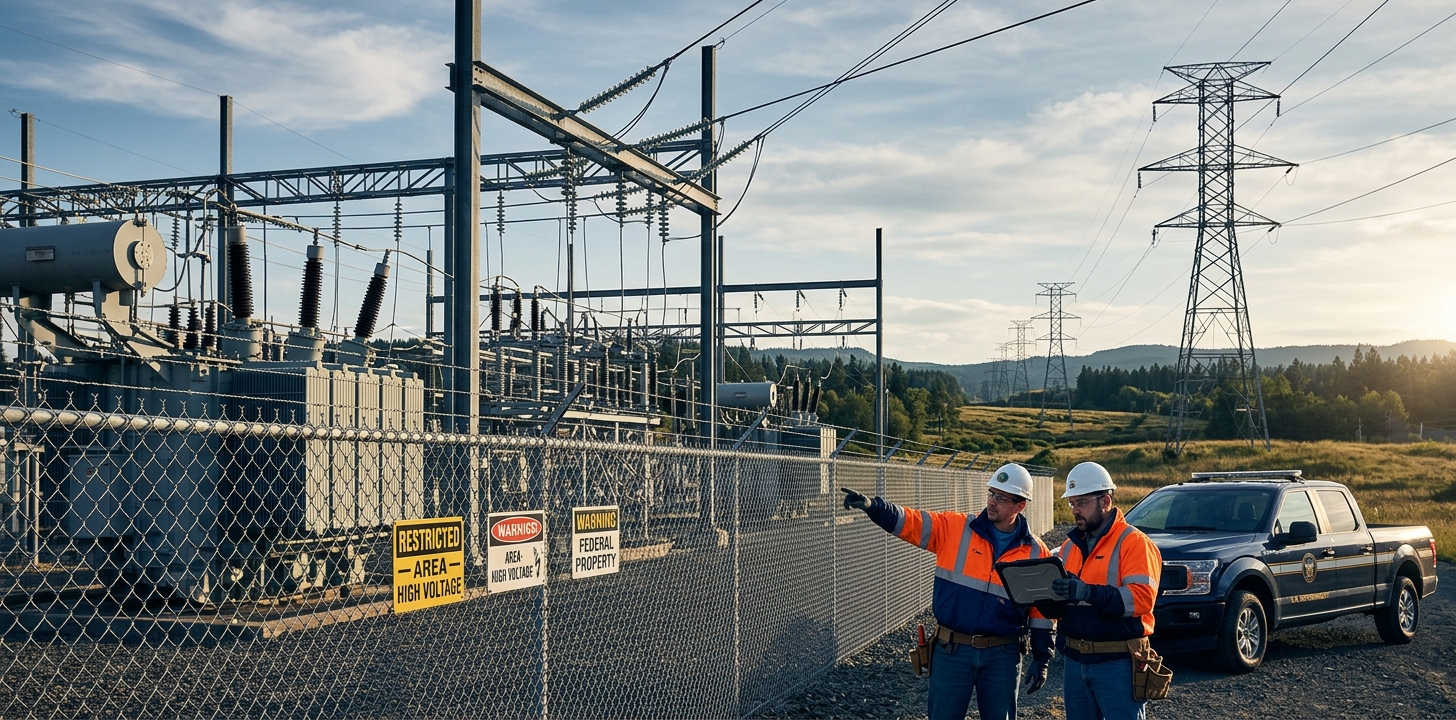
Broad Scope: The order targets components such as substation transformers, inverters, and battery energy storage systems operating at or above 69 kV.
-
Supply Chain Impact: This declaration creates uncertainty for energy developers and may affect existing foreign-made hardware in the U.S. grid.
On August 26, 2026, President Trump issued Executive Order (EO) 14420, declaring a national emergency. This order aims to protect the U.S. bulk-power grid from foreign equipment cyber threats. It invokes the International Emergency Economic Powers Act (IEEPA) and the National Emergencies Act (NEA). This action expands on a previous 2020 executive order (EO 13920), which was later rescinded by President Biden.¹
The core purpose is to secure the U.S. bulk-power system against vulnerabilities. These include cyberattacks, remote access risks, sabotage, and potential supply disruptions from foreign-manufactured components. Growing electricity demand from advanced manufacturing, data centers, AI, and defense production magnifies the consequences of potential attacks on the grid.²
Targeted Equipment and Entities
The executive order specifically targets high-voltage components vital to the grid. These include substation transformers, inverters, and battery energy storage systems (BESS). Its scope extends beyond hardware, encompassing critical components, software, firmware, digital services, maintenance services, and remote access capabilities linked to this equipment.²
The order applies to high-voltage infrastructure operating at or above 69 kV. It does not cover local distribution networks. EO 14420 authorizes restrictions on certain foreign-produced bulk-power equipment linked to Covered Foreign Entities when the Secretary of Energy determines the transaction presents specified national-security risks.
A "Covered Foreign Entity" is defined as a country or person owned by, controlled by, or subject to the jurisdiction of a foreign government under ITAR sanctions or embargoes. China is generally considered a major supplier of the targeted equipment among the countries that could be designated as "Covered Foreign Entities."¹
Implementation and Future Regulations
The Department of Energy (DOE) is responsible for implementing this executive order. They must publish implementing rules or regulations, as needed, within 120 days of August 26, 2026, which means by December 24, 2026.¹ These regulations will likely define "Covered Foreign Entities," establish licensing procedures, and create lists of pre-qualified vendors.
The Secretary of Energy also has authority over existing foreign equipment already in use within U.S. bulk-power systems.¹ Conditions could range from identification and monitoring to securing, disconnecting, replacing, or even removing existing foreign hardware. Before mandating disruptive actions, the DOE must consider reliability, safety, availability of secure replacements, and continuity of essential services, and may allow phased compliance.² This suggests that compliance could be phased in.
The order took effect immediately on August 26, 2026. The order applies to transactions initiated after August 26, 2026, but prohibitions depend on the Secretary of Energy making the determinations specified in the order.
Supply Chain Implications
This order introduces significant uncertainty, especially for energy and data center developers trying to expedite project development. Restricting equipment and supplier options could delay infrastructure expansion, particularly where transformers, turbines, batteries, and other major components already face limited supply or long procurement cycles.¹
Grid equipment manufacturers are seeking clarity on the rules, especially concerning software and digital products where the country of origin can be difficult to determine.³ The order highlights cybersecurity risks like hidden digital access mechanisms and the U.S. supply chain's dependence on overseas suppliers for critical components and maintenance. Recent industry reports have identified undocumented communication devices and remote-access capabilities in some foreign-manufactured solar inverters and battery systems, underscoring these concerns.⁴
Market Domination by Foreign Entities
Several key segments of the energy storage market are heavily influenced by foreign entities. Chinese producers like CATL, BYD, and Sungrow largely dominate the global BESS market, often underbidding U.S. competitors. In 2025, Chinese companies supplied 90% of the top 10 global BESS cell suppliers.⁵ Furthermore, eight of the top 10 global system integrators for energy storage are headquartered in China.⁶
The global battery storage inverter market was valued at USD 8.45 billion in 2025 and is projected to reach USD 9.35 billion in 2026. Asia Pacific currently dominates this market, but North America is a significant and growing region.⁷ North America's battery storage inverter market alone was valued at USD 1.86 billion in 2025 and is projected to reach USD 2.05 billion in 2026. The U.S. transformer market is also growing, especially for three-phase liquid-immersed units, driven largely by the urgent need to replace aging transformer infrastructure and modernize the grid to support increasing electrification and renewable energy integration in the United States.⁸
Recommendations for Companies
Companies operating in the U.S. energy sector should take immediate action. This includes conducting thorough supply chain audits to identify any reliance on "Covered Foreign Entities". It is also crucial to review equipment supply; engineering, procurement, and construction (EPC); interconnection; and operations and maintenance (O&M) agreements for compliance representations, change-in-law provisions, termination and substitution rights, force majeure treatment, schedule relief, and allocation of replacement costs.¹
Participation in the DOE's rulemaking process is advisable. This allows companies to provide input and gain clarity as the implementing regulations are developed.¹ The coming months will be critical for understanding the full impact of this US national emergency declared on foreign grid equipment.
Sources:
Executive Order 14420: Impacts on Energy Projects, Power Supply, and Data Centers (dwt.com)
Bulk-Power System Executive Order Adds a New Grid Supply Chain Compliance Layer, 2026 (morganlewis.com)
828959 (utilitydive.com)
What the New Executive Order Means for Grid Cybersecurity and Supply Chain Risk (bakerdonelson.com)
The top energy storage cell suppliers and system integrators in 2025, Benchmark Team, 2026 (source.benchmarkminerals.com)
Chinese system integrators capture 76% of global BESS market as competition intensifies, April Bonner, 2026 (energy-storage.news)
Battery Storage Inverter Market 111835 (fortunebusinessinsights.com)
U.S. Transformers Market Research Report 2025- 2030, Research and Markets ltd (researchandmarkets.com)
Will is a Home Improvement Editor with a passion for helping homeowners make confident, well-informed decisions about their homes. He specializes in reviewing and refining content covering home renovations, solar energy, roofing, HVAC, insulation, windows, flooring, plumbing, electrical systems, and other key areas of residential improvement. With a strong background in research and technical writing, Will is committed to ensuring every article ...
Learn more about Will Anning