Updated 1 month ago
Solar Power in Albuquerque: High Production Ratios and Local Advantages
Written by
Will Anning
Find out what solar panels cost in your area
Key takeaways
-
High Production: Albuquerque's strong solar resource can result in higher solar production per installed watt than many U.S. locations.
-
Climate Benefits: Abundant annual sunshine - Higher energy output, high elevation, and clear, low-humidity air boost solar panel efficiency.
-
Local Incentives: New Mexico offers a 10% state tax credit, sales tax exemption, and property tax exemption for solar installations⁵.
-
Faster Payback: Homeowners can expect a solar system payback period of around 9.7 years in Albuquerque¹.
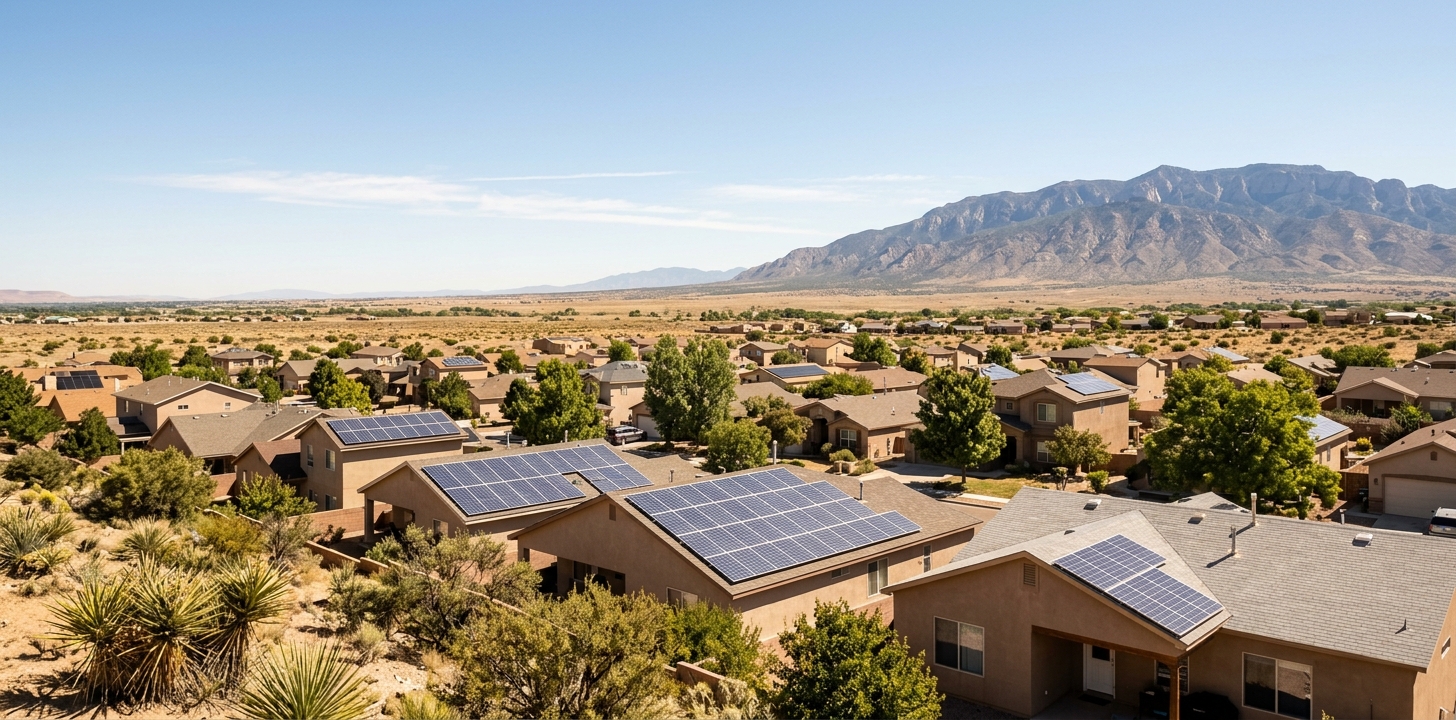
Albuquerque stands out as a prime location for solar power generation. The city’s unique combination of high solar irradiance, elevation, and dry climate creates conditions that significantly boost solar panel efficiency and overall energy production. Homeowners here can see greater energy yields from their solar installations compared to many other major U.S. cities.
The benefits extend beyond just energy output. High production ratios mean smaller systems can meet electricity needs, potentially reducing upfront costs and accelerating the return on investment. This guide examines the specific climatic and economic factors that make solar power in Albuquerque particularly effective.
Why Albuquerque's Climate Boosts Solar Production
Albuquerque's geographical and atmospheric conditions contribute directly to its exceptional solar potential. These factors combine to create an environment where solar panels perform at a higher level than the national average.
Albuquerque has abundant sunshine throughout the year. This consistent sunlight is a fundamental driver for high solar energy production. Clear skies translate directly to more hours of peak solar generation.
Albuquerque's elevation, at over a mile high (5,312 feet), plays a significant role. The thinner atmosphere at this altitude reduces the amount of particulate matter and water vapor present. Albuquerque's high elevation and clear, dry atmosphere contribute to its strong solar resource. More direct sunlight means more electricity generated.
Solar panels collect light, not heat. While hot panels can lose efficiency, Albuquerque's clear, low-humidity air and consistent sunshine optimize panel performance overall.
The clear, low-humidity desert air further optimizes solar panel efficiency. Cooler temperatures generally enhance the efficiency of solar panels, even under intense sun². This combination of factors allows solar power in Albuquerque to deliver impressive output.
For context, Albuquerque's strong solar resource can result in higher solar production per installed watt than many U.S. locations. An 8 kW solar system, for instance, typically generates 12,500–14,000 kWh annually in Albuquerque. The same system in cities like Atlanta would yield only 9,500–11,000 kWh. A 6 kW system in Albuquerque produces around 10,560 kWh per year.
System Sizing and Efficiency Considerations
The higher production ratios in Albuquerque have practical implications for system sizing. Since each watt of installed capacity generates more electricity, homeowners may achieve their energy goals with a slightly smaller system than they would need in other regions.
Despite the generally favorable conditions, Albuquerque's high-altitude UV environment presents a specific challenge. The UV index often reaches 11–12 from April to September.
To mitigate this, selecting solar panels designed for robust UV resistance is crucial for long-term performance³. Panels with high-quality UV-resistant backsheets and encapsulants can better withstand these conditions. Understanding the various components of a solar power system can help homeowners make informed decisions about panel selection Solar power system equipment: needs, costs, pros, and cons.
Costs and Financial Incentives
The average system cost for a 7.2 kW solar system in Albuquerque is approximately $20,300 before incentives, at $2.84 per watt. The cost per watt in Albuquerque ranges from approximately $2.78 to $2.84, which is lower than the national average of $3.03 per watt. The average size for solar installations in Albuquerque is a 9.62 kW system.
While the federal residential solar tax credit (ITC) of 30% expired on December 31, 2025, and is not available for residential systems installed in 2026 and beyond, New Mexico offers strong state-level support for solar.
Homeowners in New Mexico can benefit from several key incentives:
New Mexico Solar Market Development Tax Credit (SMDTC): This refundable state income tax credit offers 10% of the total system cost, up to a maximum of $6,000 per year. This credit is available for systems installed through December 31, 2031.
Gross Receipts Tax Exemption: New Mexico exempts solar energy systems and paired battery storage equipment from Gross Receipts Tax. This saves homeowners thousands of dollars at the point of purchase.
Property Tax Exemption: The added home value from solar installations is permanently exempt from property tax reassessment in New Mexico for valuations made on or after January 1, 2025. This means homeowners will not pay higher property taxes for increasing their home's value with solar. These incentives significantly reduce the overall cost of a solar installation. For more general information on available financial support, explore our guide to Solar Incentives.
Payback Period and Long-Term Savings
With the combination of high solar production and state incentives, the financial outlook for solar power in Albuquerque is favorable. The estimated payback period for a purchased solar system in Albuquerque is around 9.7 years with current PNM rates and the state credit.
This relatively quick payback period contributes to substantial long-term savings. The average Albuquerque homeowner is projected to save approximately $47,241 on electricity costs over 25 years with solar⁴. This figure highlights the economic advantage of harnessing solar power in this region.
New Mexico also mandates net metering for all investor-owned utilities, which further enhances savings. Net metering allows homeowners to receive credits for any excess solar electricity they send back to the grid, effectively reducing their utility bills when production exceeds consumption. This mechanism ensures that every kilowatt-hour generated contributes to financial benefit.
Pros
-
Higher energy production per watt compared to many other U.S. cities
-
Significant state tax credit of 10% up to $6,000
-
Exemption from Gross Receipts Tax on solar equipment
-
Permanent property tax exemption on solar-added home value
-
Mandated net metering provides credits for excess energy⁵
Cons
-
Higher UV index can slightly accelerate panel degradation
-
Federal tax credit expired as of 2026¹
Homeowners interested in pursuing solar installation can research local providers. Websites dedicated to Best Solar Companies or specific installers like Affordable Solar may be useful starting points.
Sources:
Solar Panels in Albuquerque, NM | PNM Net Metering & State Tax Credit (energyscout.io)
Five Solar Panel Myths that Albuquerque Residents Should Never Believe, admin, 2022 (affordable-solar.com)
Solar Panel Savings Calculator — Albuquerque, NM (solar-calc.lifeofabit.com)
Albuquerque, NM Solar Panel Cost: Is Solar Worth It In 2026?, 2026 (energysage.com)
New Mexico Solar Incentives 2026: Tax Credits & Rebates, 2026 (sunstatesolar.com)
Will is a Home Improvement Editor with a passion for helping homeowners make confident, well-informed decisions about their homes. He specializes in reviewing and refining content covering home renovations, solar energy, roofing, HVAC, insulation, windows, flooring, plumbing, electrical systems, and other key areas of residential improvement. With a strong background in research and technical writing, Will is committed to ensuring every article ...
Learn more about Will Anning