Updated 2 days ago
Replacement Windows: Choosing Energy-Efficient Options for Long-Term Value
Written by
Deana Barbaro
Find out what solar panels cost in your area
Key takeaways
-
Energy Savings: ENERGY STAR says replacing single-pane windows with certified models lowers household energy bills by an average of up to 13%, saving homeowners hundreds of dollars each year.
-
Return on Investment: Homeowners typically recoup 60-85% of their investment in replacement windows at resale, making it a top home improvement for ROI.
-
Professional Installation: Proper installation is crucial for performance and energy savings; always choose licensed, insured, and experienced local contractors.
Upgrading to new replacement windows offers more than just a fresh look for your home. It’s a strategic investment that can significantly improve comfort, reduce energy bills, and increase your home’s value. This guide walks you through selecting energy-efficient windows, understanding their long-term benefits, and finding reliable local installers.
Old, inefficient windows can be a major source of energy loss. Up to 30% of a home's heating and cooling energy can be lost through them¹. Replacing these with modern, energy-efficient models addresses this issue directly.
Why Upgrade to Energy-Efficient Replacement Windows?
The primary drivers for homeowners choosing replacement windows are energy savings and increased home value. Newer windows also offer improved comfort and quieter interiors. Window replacement is the second most common exterior remodeling project, with 20% of respondents undertaking it, according to the 2026 U.S. Houzz & Home Study.²
Energy Savings and Comfort
ENERGY STAR says replacing single-pane windows with certified models lowers household energy bills by an average of up to 13%, with the exact percentage depending on existing windows and climate³. A This Old House survey of 1,000 homeowners found nearly 90% reported lower monthly energy bills after installing replacement windows, with $25 to $49 per month the most common savings range. Replacing single-pane windows with ENERGY STAR certified models can save $101 to $583 per year on energy bills .
Homeowners in cold or mixed climates heating with gas or oil typically see the highest potential for these energy savings. Beyond savings, new windows enhance indoor comfort by reducing drafts and maintaining more consistent temperatures. Benefits of new windows beyond resale value include improved comfort, reduced noise (dual-pane windows cut exterior noise noticeably, triple-pane even more), and UV protection (Low-E coatings block up to 98% of UV rays)¹.
Home Value and Return on Investment (ROI)
Window replacement consistently ranks among the top home improvements for return on investment. Homeowners typically recoup 60-85% of their investment in new windows at resale. Specifically, vinyl window replacement generally recoups 68.5% to 77% of its cost at resale, while wood window replacement recoups around 61.2% to 70% of its cost at resale. New windows can also increase your home's appraised value by 50-75% of the project cost.³ ENERGY STAR reports that studies have found energy-efficient, rated homes sell for 2% to 8% more in most markets. For a broader look at how energy efficiency impacts home value, consider reading about energy-efficient home upgrades that can affect your home value.
Energy-Efficient Window Technologies
To make an informed choice, it helps to understand the key features that make windows energy efficient. Look for the ENERGY STAR label, which certifies that a window meets strict energy efficiency guidelines.
ENERGY STAR certified windows must meet Version 7.0 criteria, in effect since October 2023. Homeowners should look for the correct ENERGY STAR label for their specific climate zone in the US (Northern, North-Central, South-Central, Southern)¹.
Key Performance Metrics
U-factor: Measures how well a window prevents heat from escaping. Lower U-factors mean better insulation. Under ENERGY STAR Version 7.0, the maximum U-factor is 0.22 in the Northern zone, 0.25 in North-Central, 0.28 in South-Central and 0.32 in the Southern zone.¹
Solar Heat Gain Coefficient (SHGC): Measures how much solar radiation passes through a window as heat. Lower Solar Heat Gain Coefficient (SHGC) values are generally preferred in warmer climates⁵.
Window Construction and Materials
Several technologies contribute to a window's energy performance:
Double or Triple-Pane Glass: These windows use multiple panes of glass separated by an inert gas, such as argon or krypton. This gas acts as an insulator, reducing heat transfer.
Low-E Glass: This special coating reflects infrared light, keeping heat inside during winter and outside during summer. It also helps block harmful UV rays.
Vinyl Frames: Vinyl-framed windows are a popular choice due to their durability, low maintenance needs, and good insulation properties.
Fiberglass Frames: Fiberglass windows offer premium durability and excellent energy performance but generally have a higher upfront cost⁶.
Electrochromic Glass: This advanced glass can tint on command or react to sunlight, potentially cutting 10-20% off cooling costs in sunny climates¹.
Cost and Payback Period for Replacement Windows
The cost of replacement windows varies significantly based on material, type, and installation complexity. Understanding these costs and the potential payback period helps in budgeting and decision-making.
A full-house window replacement project (10-20 windows) can cost between $6,000 and $21,000, depending on materials and type. The typical payback period for energy savings from new windows is 8-12 years⁵. Some estimates suggest the payback period can be 6 to 8 years when factoring in incentives¹. Replacing single-pane windows can lead to payback timelines ranging from 10 to 36 years, depending on window age, condition, climate, and heating source⁶.
Incentives and Financing
Federal tax credits for window replacement projects do not apply to installations completed in 2026 or later, as the Energy Efficient Home Improvement Credit expired on December 31, 2025. Homeowners who installed qualifying windows by December 31, 2025, could claim 30% of the cost (up to a $600 annual cap) for the 2025 tax year. These qualifying windows needed to meet ENERGY STAR "Most Efficient" criteria and require a Qualified Manufacturer Identification Number (QMID) or PIN⁷.
Today, homeowners can still find various rebates and incentives from state and local governments, utility providers, and manufacturers. These programs often require windows to meet specific ENERGY STAR or efficiency performance standards. Resources like the Database of State Incentives for Renewables and Efficiency (DSIRE) and the ENERGY STAR Rebate Finder can help you locate programs by state or zip code. Some utility programs, such as Duke's Smart $aver, offer rebates up to $3,250 for qualifying window replacements. PSE also offers window rebates based on U-factor, with a limit of 15 window rebates per property over its lifetime. A home energy audit can also qualify for rebates⁸.
Many homeowners finance window projects through home improvement loans, Home Equity Lines of Credit (HELOCs), or contractor financing⁶.
Finding a Reputable Local Installer
Proper installation is as crucial as the windows themselves. Incorrect installation can lead to drafts, moisture issues, and negate the energy efficiency benefits of new windows. Finding a reliable installer is key to a successful project. Many homeowners search for "window replacement near me" or "replacement windows near me" to find local options.
What to Look For in a Contractor
Licensing and Insurance: A reputable contractor should provide proof of active state licensing and comprehensive insurance, including general liability and workers' compensation. This protects you from liability in case of accidents on your property.
Certifications and Experience: Look for installation crews with advanced certifications from recognized industry organizations or specific product manufacturers. Professional installers have experience addressing common issues like rotted frames, structural problems, or out-of-square openings.
Reviews and References: Choose a company with solid experience and positive reviews from previous clients. Ask for references and check their online reputation.
Clear Process and Warranty: A good contractor will have a clear, step-by-step installation process⁹. Understand the warranties offered on both the windows and the installation itself.
Avoid Red Flags: Be wary of high-pressure sales tactics, sudden price drops, or "today-only" deals. These can be signs of less reputable operations.
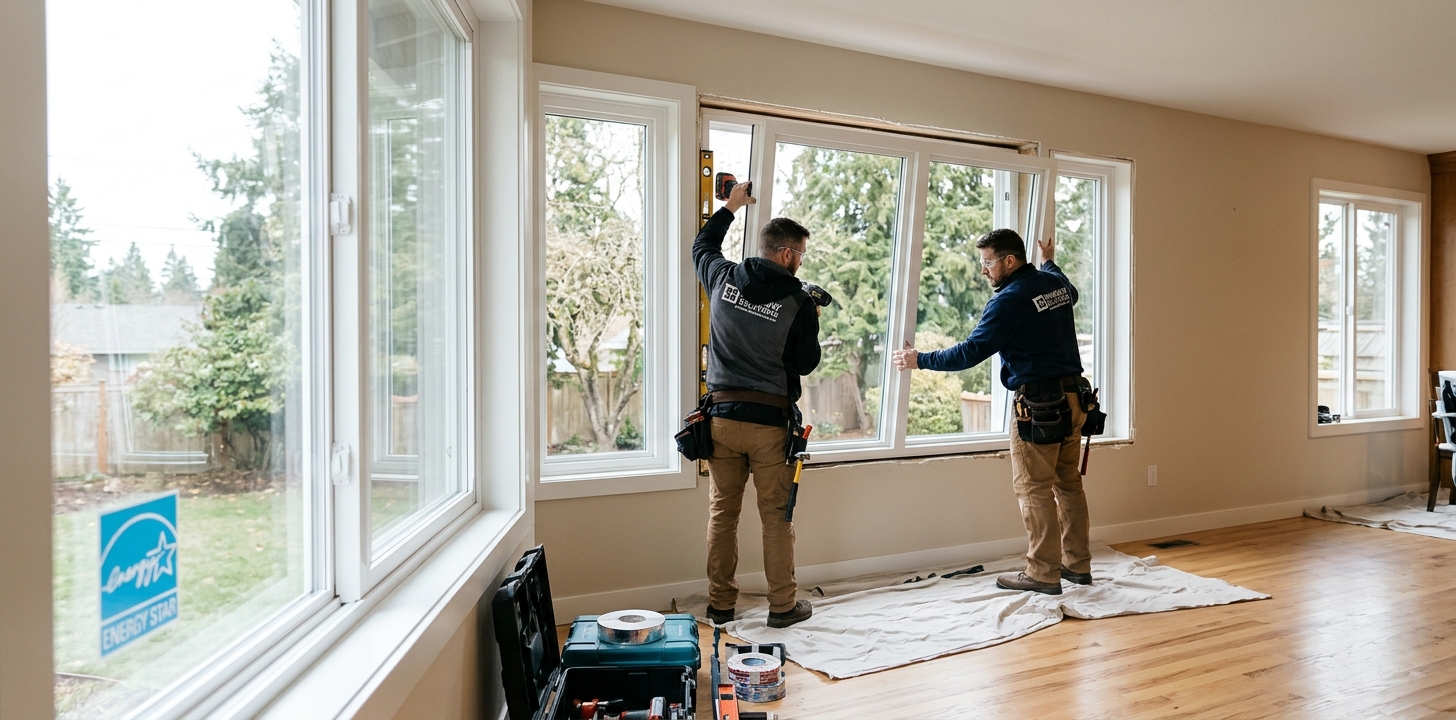
The Installation Process: What to Expect
Knowing what happens during window replacement helps you prepare and understand the work.
Before Installation Day
Clear the Area: Move furniture, lamps, plants, and breakable items away from windows, both inside and outside. This includes removing any obstacles like grills or patio furniture.
Remove Window Treatments: Take down all curtains, blinds, and shades.
Pet and Child Care: Arrange for pets and children to be elsewhere during the installation for their safety and to avoid disruptions.
Security Systems: If security sensors are attached to window frames, homeowners should contact their alarm company beforehand⁹.
Pre-Installation Check: If new windows are delivered beforehand, store them securely in a garage. Conduct a walk-through with the foreman to confirm the correct windows were delivered and to review the project scope.
During Installation
Protection: Installers will lay down drop cloths and protect surrounding areas.
Removal: Existing windows are carefully removed.
Preparation: The opening is inspected and prepped. This involves filling holes, replacing damaged wood, and insulating weight chambers.
Fitting: A dry-fit of the new window ensures a proper fit, aiming for about a quarter-inch space around all sides.
Sealing and Setting: Exterior-grade caulk is applied, and the new window is carefully set and centered. It is then leveled and secured.
Insulation and Finishing: The area around the window opening is insulated, and the exterior is sealed to prevent drafts and moisture. Finishing trim is reinstalled or added, edges are caulked, finishes are touched up, and debris is cleaned up⁹.
Post-Installation Review
After installation, the window's operation (open, close, lock, tilt) is tested, and seals are inspected. The foreman should review the work with you. Professional installation helps avoid common mistakes such as cracked trim, non-square openings, improper insulation, and poor sealing that can lead to drafts, leaks, and reduced energy efficiency⁹.
Recommendation for Homeowners
Investing in energy-efficient replacement windows is a sound decision for most homeowners. The benefits extend beyond aesthetics, offering significant annual energy savings, improved home comfort, and a strong return on investment at resale.
Prioritize windows that meet or exceed ENERGY STAR Version 7.0 criteria for your climate zone. Select reputable, licensed, and insured local installers who provide clear warranties and have a proven track record. While federal tax credits for 2026 and beyond are not available, explore state, local, and utility incentives to further reduce your costs.
By focusing on quality products and professional installation, you can maximize the long-term value and comfort that new replacement windows bring to your home.
Sources:
Energy-Efficient Windows 2026: Save $500+ Per Year, 2026 (eafadoors.com)
Investing in Long-Term Value with New Windows, Michele Lerner, Associate Editor, 2026 (greenbuildermedia.com)
Do Replacement Windows Increase Home Value? ROI Data for 2026 (getwindowcost.com)
Residential Windows, Doors, & Skylights (energystar.gov)
Most Energy Efficient Windows & Brands (2026), DuloCore Team, 2026 (dulocore.com)
Energy-Efficient Windows Costs and Savings, 2026 (homegeniusexteriors.com)
U.S. Window Tax Credit in 2026: Only for 2025 Installs, 2026 (star-ws.com)
Financing & Incentives, 2025 (efficientwindows.org)
How Replacement Windows Are Installed: A Homeowner’s Guide to Professional Installation, Jessica Ashcroft, 2026 (windowdepotusa.com)
Deana is a Home Improvement Editor with a passion for helping homeowners navigate renovation, repair, and remodeling with confidence. Specializing in roofing, kitchen and bath remodeling, and outdoor living spaces, she combines industry knowledge with a genuine commitment to making complex home projects feel approachable for readers at every stage of their journey. Her path into home improvement media began after several years working alongside ...
Learn more about Deana Barbaro