Find out what solar panels cost in your area
Key takeaways
-
Enhanced Backup Power: Solar and battery systems can provide backup power during Public Safety Power Shutoffs (PSPS) and other grid outages, depending on system size, battery charge, solar conditions, and household energy use.
-
Grid Stability: Stored solar energy can support the main grid during peak demand and aid in faster restoration after outages.
-
Incentives Available: State and utility programs may offer financial incentives for installing solar batteries, including programs targeted at vulnerable or high-risk communities.
-
Smoke Impact: Wildfire smoke can reduce solar panel output, but battery storage mitigates this by holding power for later use.
The United States is currently experiencing a historically active wildfire season in 2026, with over 8.4 million acres burned nationwide as of mid-September. This figure significantly exceeds the 10-year average¹. Large fires are currently active in at least 13 states, with particularly high-priority incidents in the Southern and Rocky Mountain regions exhibiting extreme fire behavior².
Drought conditions are affecting nearly 60% of the country, exacerbating wildfire risk¹. This widespread activity increases the likelihood of power outages, underscoring the vital need for resilient home energy systems, especially in vulnerable areas³. Solar and battery systems offer a solution, boosting wildfire resilience for homeowners.
The Role of Solar and Batteries in Preventing Outages
Utilities in wildfire-prone areas, especially California, implement Public Safety Power Shutoffs (PSPS) to prevent electrical equipment from sparking wildfires during high winds and dry conditions⁴. These proactive PSPS events can leave thousands without power for hours or even days⁵.
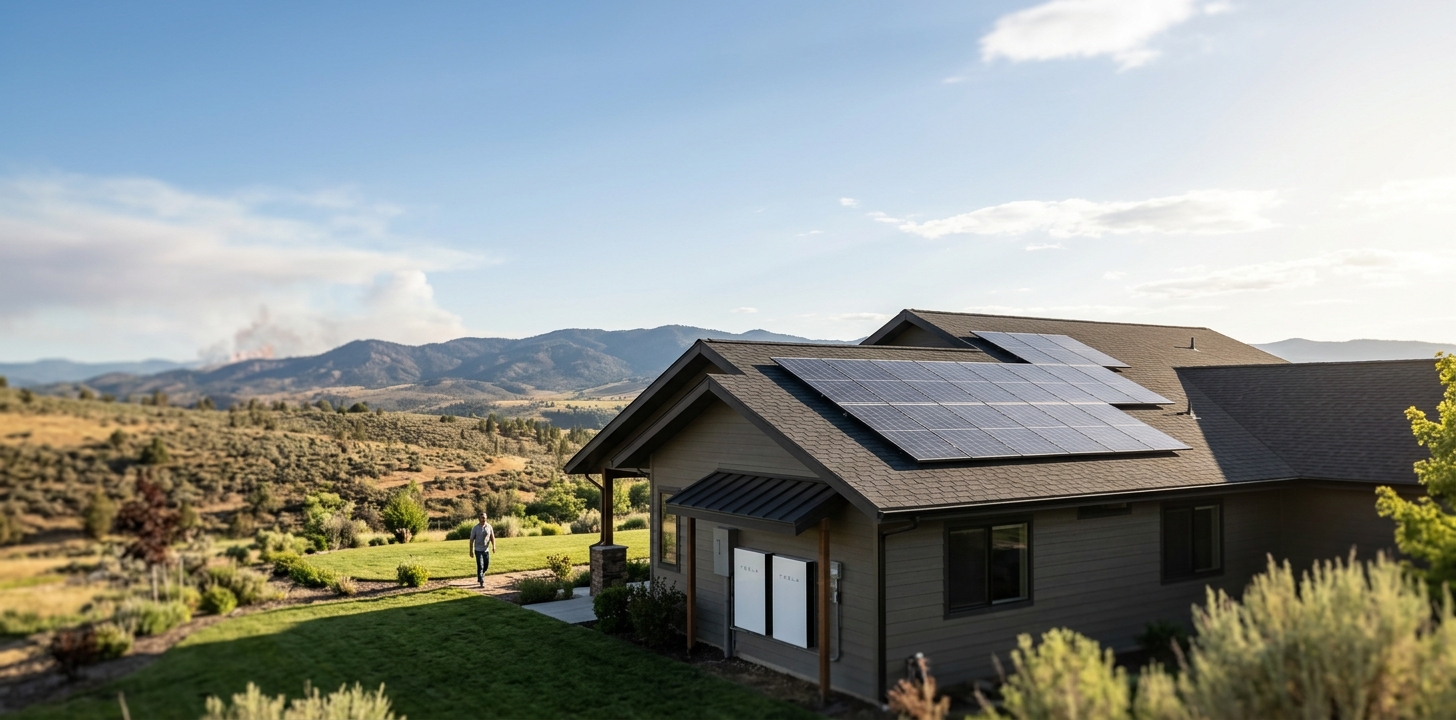
Solar panels paired with battery storage provide a reliable backup power source during PSPS events. This setup keeps essential appliances, lights, refrigerators, and communication devices running. A properly sized battery-backed solar system can help keep essential medical equipment operating during an outage⁴.
Solar and storage can reduce disruption during a PSPS by keeping essential loads powered. This avoids disruptions like finding alternative accommodation or worrying about spoiled food. Businesses can also minimize work disruptions and financial impacts with solar and storage during these events⁴.
Pros
-
Backup power during grid outages and PSPS events.
-
Quiet, clean, and self-recharging energy source.
-
Ability to power essential medical equipment and appliances.
-
Contributes to overall grid stability and faster restoration after outages.
Cons
-
Wildfire smoke can temporarily reduce solar panel output.
-
Initial installation costs can be significant, though incentives help.
How Solar & Batteries Aid Grid Stability
Solar power combined with battery storage enables the creation of microgrids, which are small electrical grids that can operate independently. These microgrids allow specific communities or facilities, such as hospitals, fire stations, and shelters, to maintain power even if the main grid is down⁶.
Excess solar energy stored in batteries can be discharged during peak demand or when the grid is stressed. This helps stabilize the power system and can prevent wider outages. Batteries also aid in smoother and faster grid restoration after an outage by managing cold-load pickup and reducing inrush currents⁶.
Solar + storage systems can recharge using sunlight when solar conditions and system configuration allow, reducing reliance on stored fuel⁴.
Challenges to Current Energy Infrastructure
Wildfires directly damage energy infrastructure, and an increased fire risk leads to more grid failures. From 2001 to 2023, human activity, including electrical operations, caused roughly 68 million acres to burn in the US⁷.
The aging US electric infrastructure, much of it built over 30 years ago, faces increasing strain. Rising energy demand, coupled with threats from wildfires and extreme weather, exacerbates this issue³. Power outages are increasing across the U.S., with weather-related blackouts rising by nearly 80% in the past decade . California and Texas face among the highest blackout risks in 2026, with California experiencing frequent outages due to wildfire mitigation and PSPS .
Grid outages during wildfires can compromise essential services such as water infrastructure, hospital operations, and evacuation routes . This further endangers public safety. Integrating solar and battery storage helps mitigate these risks.⁴
Impact of Wildfire Smoke on Solar Output
Wildfire smoke can reduce solar radiation reaching photovoltaic panels, decreasing solar output. During California's 2020 wildfire season, daily average solar resources near major fires fell by 11% to 17% for conventional solar panels. In heavily smoke-affected areas, monthly average reductions in solar output reached as much as 25%⁸.
While smoke can temporarily hinder solar production, battery storage provides a buffer.⁴ Homeowners can store energy during clearer periods and draw on battery reserves when smoke reduces solar generation. This can help maintain backup power when smoke temporarily reduces solar generation, depending on available battery capacity and household demand.
Incentives for Solar Battery Storage
State and utility programs may offer financial incentives for installing solar batteries, including programs targeted at vulnerable or high-risk communities. Several states offer specific incentives for home solar batteries, recognizing their value for energy storage and resilience, particularly in wildfire-prone areas⁹.
For example, California's Self-Generation Incentive Program (SGIP) provides rebates for installing solar batteries. This program offers higher incentives for low-income customers and those in highly fire-prone areas. SGIP includes enhanced support for certain income-qualified and vulnerable customers, subject to current eligibility and funding requirements. This significantly reduces the cost of battery storage⁹.
Other states, including Hawaii, Maryland, Massachusetts, Minnesota, Connecticut, and Vermont, also offer various incentives such as rebates, tax credits, and performance-based programs for battery storage⁹. Some state programs prioritize funding for businesses in high-risk wildfire zones to enhance grid stability . For more detailed information on available solar incentives.
Enhancing Home Energy Resilience
Homeowners are increasingly exploring options for backup power.⁴ Solar + storage systems offer a compelling solution for wildfire resilience. These systems can reduce reliance on the grid during outages by helping homes maintain essential power.⁶
Battery backup systems are quiet, require no fuel, and are generally maintenance-free. They offer a safer and cleaner alternative to noisy, polluting generators⁵. This makes them a practical investment for homeowners seeking to protect their families and property during an active wildfire season.¹
Sources:
Drought Summer 2026 12 Maps And Graphs 2026 09 16 (drought.gov)
Monthly Seasonal Outlook (nifc.gov)
When Fire, Extreme Heat, and an Aging Electrical Grid Intersect, 2025 (fas.org)
Preparing for wildfires: How solar + storage makes your home resilient, Energy Trust, 2026 (blog.energytrust.org)
Battery Technology | Power Your Home During Wildfires & Outages, Lauren Osborne, 2025 (solarsourceinc.com)
747080 (utilitydive.com)
Wildfires And The Grid Fact Sheet (ncel.net)
Why Wildfires Pose Multiple Threats to US West Power Sector: Maguire, Gavin Maguire, 2026 (insurancejournal.com)
Which States Offer the Best Incentives for Home Battery Systems in 2025? (franklinwh.com)
Will is a Home Improvement Editor with a passion for helping homeowners make confident, well-informed decisions about their homes. He specializes in reviewing and refining content covering home renovations, solar energy, roofing, HVAC, insulation, windows, flooring, plumbing, electrical systems, and other key areas of residential improvement. With a strong background in research and technical writing, Will is committed to ensuring every article ...
Learn more about Will Anning