Updated 8 months ago
VOLTAIC solar roof tiles: what to know about Tesla’s newest competitor
Written by
Catherine Lane
Find out what solar roofing costs in your area
VOLTAIC integrated solar roof tiles made their U.S. debut following their evolution from Ergosun and are now officially available to homeowners in the U.S. The company has one major competitor in the integrated solar roof space: Tesla. Despite Tesla’s long-term association with solar roofing, it hasn’t seen widespread adoption until recently.
Will VOLTAIC be able to compete with the tech giant? In this blog, we’ll compare the two products to see how they stack up.
Who is VOLTAIC?
VOLTAIC Roof Tile produces solar roof tiles designed to blend in visually while performing like a standard premium roof. Rather than reinventing the roof itself, the company enhanced established roofing materials to improve aesthetics, weather resistance, ease of installation, cost predictability, and long-term energy output.
What is the VOLTAIC solar roof?
VOLTAIC’s solar roof tiles deliver clean energy while maintaining a low-profile, aesthetic roof appearance. By embedding photovoltaic (PV) cells into concrete roofing tiles, VOLTAIC aims to provide a durable, visually appealing alternative to conventional solar panels that still produces meaningful electricity for the home.
Specification | VOLTAIC solar tiles (formerly Ergosun) |
|---|---|
Price | $3.63 per watt |
Efficiency | 19.22% |
Power output | 17.5 W |
Dimensions | 11.73" x 13.19" |
Power warranty | 80% production at 25 years |
Product warranty | 10 years |
Each VOLTAIC solar tile consists of solar PV cells attached to a Westlake roofing tile. You can choose between two different styles: charcoal or terracotta clay. Terracotta clay tiles must be specially ordered.
The remainder of your roof can then be covered by conventional concrete or clay tiles to match your VOLTAIC solar tiles. Most VOLTAIC customers choose Westlake tiles to match, but you can choose any brand you’d like.
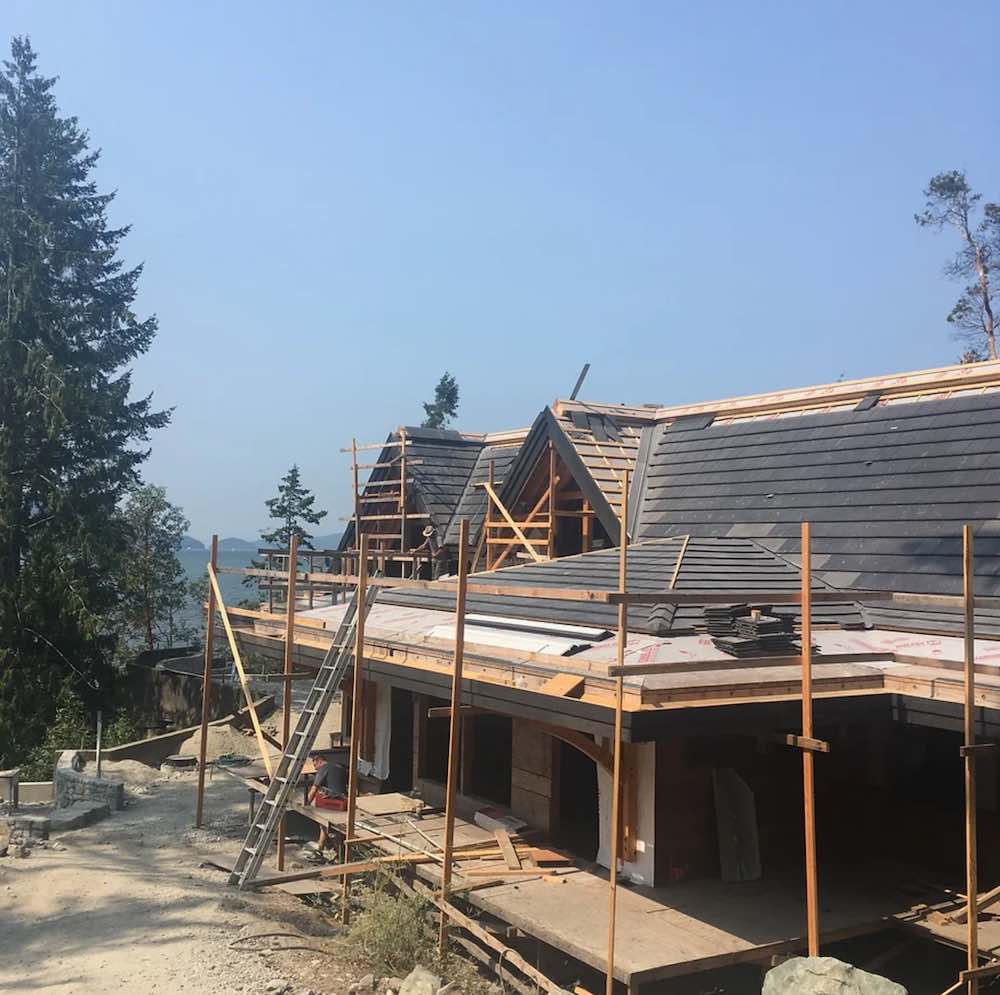
VOLTAIC’s most popular option is the charcoal tile. Image source: VOLTAIC
If you already have a tile roof, you don’t have to completely replace your existing roof. However, most VOLTAIC customers do strive to make sure their roof looks as uniform as possible.
As of February 2021, VOLTAIC has installed around 80 solar roof systems worldwide and are hoping to increase that number as they expand in the U.S. Many of VOLTAIC’s installations have been part of new home construction projects.
Pros and cons of VOLTAIC solar roof tiles
Pros
-
High efficiency and power rating
-
Aesthetics
-
Durability
-
Environmentally friendly
-
Customer service
Cons
-
Expensive
-
Warranty
Advantages of the VOLTAIC solar roof tiles
High efficiency and power rating
VOLTAIC’s solar roof tiles are more efficient than Tesla’s solar roof tiles - meaning they convert more of the sunlight that hits each tile into usable electricity.
This has to do with the design of VOLTAIC’s tiles - unlike the Tesla version, they don’t have a glass surface. The matte finish allows them to convert more sunlight into electricity and perform better in low-light conditions.
Although at first glance it seems like Tesla has a higher power rating, their shingles are substantially larger. If scaled up to the size of a Tesla shingle, VOLTAIC’s power output would be about 62 watts, which beats out Tesla’s 58.47 watts.
The high efficiency of VOLTAIC solar tiles make them a great choice for homeowners with limited roof space.
Find out what solar roofing costs in your area
Aesthetics
What’s great about VOLTAIC’s tiles is that they come in two different style options: concrete or terracotta clay. This makes it easy to match your home’s aesthetic, which is the whole appeal of solar roof tiles.
Tesla only offers one style. While it is a sleek look, it doesn’t necessarily match every home’s design. VOLTAIC gives homeowners a little more flexibility when it comes to the look of their roof.
Durability
VOLTAIC allows you to cover your roof with either concrete or clay tiles - two of the most durable roofing materials available.
Concrete and clay tiles have lifespans that can exceed 50 years. They also hold up great under extreme conditions, such as harsh cold temperatures or earthquakes. VOLTAIC tiles have a Class A fire resistance rating, as well.
Environmentally friendly
Aside from producing clean solar energy for your home, VOLTAIC utilizing concrete and clay tiles makes them even more green: the materials used in the concrete and clay tiles are easily recyclable.
Plus, concrete and clay roofs are excellent at insulating your home. This means your house can stay warmer in the winter, and cooler in the summer - all while keeping your electricity bill low.
Customer service
Because VOLTAIC is a relatively new company (and relatively small), it’s likely they will be able to give you personalized customer service.
Unlike Tesla, VOLTAIC’s only product is solar shingles, so they are allocating their resources solely to their solar roof product. Plus, Tesla has historically been known to have not-so-great solar customer service in the long term.
Cons
Expensive
VOLTAIC tiles cost $3.63 per watt, compared to Tesla solar roof cost $1.80 per watt. This is a pretty big price difference.
Some of the cost discrepancies can be attributed to how long the company has been around: Tesla has a lot of money and recognition behind their name, which allows them to keep prices low.
It’s also important to keep in mind that VOLTAIC is giving you a higher efficiency solar technology and a durable roofing product, which drives up price. However, when you take the federal tax solar tax credit into consideration, the cost for VOLTAIC tiles would fall to about $2.54 per watt.
Weight
While using concrete and clay tiles for their product does provide some advantages, it does bring one big disadvantage: weight.
VOLTAIC’s tiles weigh about 12 9.4 pounds per square foot, on par with traditional concrete tile roofs. While this is lighter than some concrete tile options, it’s still heavier than conventional asphalt shingles.
That’s a lot of weight to put on your roofing structure, and not all homes can handle it. So, if you don’t already have a concrete or tile roof, you’ll have to hire a structural engineer to make sure your roof can handle an VOLTAIC solar roof.
Warranty
VOLTAIC’s warranty isn’t bad - but it isn’t the best either.
VOLTAIC’s production warranty states that by Year 25, your solar tiles will operate at no less than 80% of their original capacity. This is pretty standard when it comes to solar panels.
However, the issue is that VOLTAIC does not specify a yearly degradation rate. When solar panel warranties include a yearly degradation rate, you can get a better idea of how much energy your system will produce each year. Without it, your solar systems production can fall off substantially, and there’s nothing you can really do about it.
So, in an extreme scenario, say your VOLTAIC tiles could start producing at 80% capacity after 2 years (which is very rare) and it would still be within the warranty terms. According to the warranty, as long as they are operating at at least 80% of their original power by Year 25, they’re within the terms of the warranty.
To be clear, the chances of having the production drop that steep is extremely low. But because there is nothing in the warranty that suggests that can’t happen.
Should you install VOLTAIC solar tiles on your roof?
VOLTAIC’s solar roof tiles are a strong choice for homeowners who want renewable energy without sacrificing roof aesthetics. The tiles provide a sleek, integrated design and solid per-tile efficiency. However, as a newer product category under a rebranded name, there is still limited long-term performance data compared to more conventional solutions.
Because VOLTAIC tiles grew out of the original Ergosun technology, they represent a continuation of that integrated solar roofing concept with refreshed branding and added commercial focus.
So, while VOLTAIC’s prices are higher and their warranty could be better, they do let you know all of their specifications right off the bat. At the very least, it’s worth it to get a quote from VOLTAIC if you’re in their service area, especially if you want a concrete or tile roof.
Working with an installer is the best way to ensure you get the best solar system installed on your roof - for your specific needs.
Find out how much you can this year by switching to solar roofing
Key takeaways
-
VOLTAIC’s integrated solar roof tiles are designed to fit in with a clay or concrete tile roof.
-
VOLTAIC's solar tiles boast an efficiency of 19.22% and a power output of 15 watts per tile, making them a great choice for homeowners with limited roofing space.
-
VOLTAIC’s solar roof tiles cost $3.63 per watt, which is more than Tesla’s popular solar roof tiles.
-
Because VOLTAIC’s solar tiles are made using clay and concrete materials, they are durable, environmentally friendly, and give homeowners more options for the design of their roof.
-
The biggest downsides to VOLTAIC’s solar roof tile is their weight, their price, and their warranty terms.
Catherine is a solar industry analyst and content manager with five years of experience researching and reporting on residential solar. As the former Written Content Manager at SolarReviews, she led a team producing informative content to help homeowners make informed decisions about solar investments. Her expertise has been featured in Solar Today Magazine and Solar Industry Magazine, with insights cited by major outlets including Forbes and Bl...
Learn more about Catherine Lane